Note éditoriale : cette version française reprend la structure et les informations de la version anglaise, avec les références produit adaptées à Outly. La priorité SEO reste la version anglaise.
Outreach Marketing expliqué : comment lancer des campagnes à très forte engagement ?
À retenir :
L’outreach marketing consiste à contacter proactivement des prospects via LinkedIn, l’e-mail et d’autres canaux afin de générer des leads et de créer des relations.
Avec une personnalisation soignée et des campagnes multicanales stratégiques, les entreprises peuvent atteindre des taux de réponse de 10 à 20 % et améliorer nettement leurs taux de conversion par rapport aux approches traditionnelles d’inbound marketing.
Si vous avez du mal à obtenir un flux régulier de leads,
Si vos e-mails à froid et vos messages LinkedIn restent à jamais marqués comme « lus »
Si vos clients idéaux ne savent même pas que vous existez, oubliez l’idée qu’ils achètent quoi que ce soit chez vous
Alors, il est certain que vous passez à côté de stratégies de prospection marketing de qualité.
« C’est quoi, ça ? », vous demandez-vous ?
Eh bien, une stratégie de prospection marketing consiste à entrer en contact avec des entreprises et des futurs clients susceptibles d’être intéressés par une collaboration avec vous ou de devenir clients.
L’idée clé, c’est que c’est vous qui faites le premier pas vers eux.
C’est pour ça qu’il y a OUT + REACH
Mais tous les prospects ne sont pas aussi enclins à répondre, vous risquez simplement d’être ignoré.
Heureusement pour vous, je suis passé par là et j’ai fini par comprendre ce qui fonctionne.
Et nous allons voir comment vraiment passer à la vitesse supérieure en prospection,
- Quels sont les types d’Outreach Marketing ?
- Quels sont les canaux d’Outreach Marketing ?
- Comment lancer une campagne d’Outreach Marketing pour développer votre activité ?
- Les 3 meilleurs outils d’Outreach Marketing pour rendre votre croissance sans effort
Qu’attendons-nous ?
Entrons dans le vif du sujet.
Qu’est-ce que l’Outreach Marketing ?
L’outreach marketing est une stratégie qui consiste à contacter des prospects, des entreprises et de nouvelles connexions susceptibles d’être intéressés par votre activité.
La meilleure façon de le faire passe par LinkedIn, la plus grande plateforme professionnelle au monde, avec plus d’un milliard de membres.
Contrairement à l’inbound marketing, vous prenez vous-même le premier contact avec votre audience cible.
En parallèle, vous pouvez aussi contacter des influenceurs LinkedIn, des entreprises plus importantes et d’autres fondateurs qui peuvent vous aider à promouvoir votre marque.
En résumé, l’idée principale est que vous devez faire le premier pas.
Et c’est plus facile à dire qu’à faire.
Quels sont les types d’Outreach Marketing ?
L’outreach marketing peut être divisé en 3 types, à savoir :
1. La prospection à froid
Ne vous montrez pas froid avec vos prospects, ce n’est pas de cela qu’il s’agit.
La prospection à froid, c’est engager la discussion avec un parfait inconnu, dans le but de conclure une vente ou d’obtenir une connexion précieuse.
Cela se fait généralement via LinkedIn, les e-mails, les appels téléphoniques ou même les réseaux sociaux.
Les compagnies d’assurance qui vous appellent sans cesse ? Oui, elles font de la prospection à froid.
Mais avec nos stratégies commerciales, vos prospects n’auront pas envie de raccrocher.
Surtout lorsque vous ajoutez une touche personnalisée à tous vos messages, comme le fait Outly. Des études montrent que la personnalisation pilotée par l’IA entraîne de meilleurs taux de réponse et davantage de conversions à partir des campagnes de prospection.
2. La prospection tiède
Ça sonne mieux qu’« à froid », non ? Et c’est le cas.
La prospection tiède consiste à recontacter quelqu’un que vous connaissez déjà. Il peut s’agir d’un ancien contact, d’une personne qui a interagi avec votre contenu, ou d’une personne rencontrée lors d’un événement.
C’est bien plus efficace que la prospection à froid, car la personne vous connaît déjà davantage, donc la relation est plus « chaude ». (Ba-dum tss)
Vous obtiendrez des taux de conversion bien plus élevés et les freins initiaux sont faibles, mais il est aussi plus difficile de passer à grande échelle.
La bonne nouvelle, c’est que vous pouvez transformer de la prospection à froid en prospection tiède, si vous connaissez les bons outils et les bonnes méthodes.
3. Le networking
L’objectif ici est de construire des relations de valeur et de découvrir des personnes partageant les mêmes centres d’intérêt au sein de votre secteur.
Développer votre réseau va renforcer votre crédibilité, ouvrir des opportunités et vous permettre aussi de faire du marketing auprès de leurs connexions.
Sur LinkedIn, développer son réseau consiste à envoyer des demandes de connexion, des InMails et à interagir avec leurs publications ou leurs profils.
Avoir un grand réseau signifie aussi que vous apparaîtrez dans davantage de recherches et de fils d’actualité, et que vos contenus publiés obtiendront de meilleures impressions.
Vous serez une star aux yeux de l’algorithme LinkedIn. (et aux miens aussi 😉)
Quels sont les canaux d’Outreach Marketing ?
Comme pour tout type de marketing, vous avez de nombreuses options à tester.
Je vais commencer par mon préféré et celui qui vous donnera probablement le plus de résultats, d’après mon expérience.
1. LinkedIn
En tant que plus grand réseau social professionnel au monde, LinkedIn compte des membres issus de tous les secteurs, que vous soyez en B2B ou en B2C.
Il propose des messages LinkedIn, des InMails, des connexions, des publications et plusieurs actions d’engagement pour réchauffer vos clients.
Et le mieux, c’est qu’il existe aussi énormément d’outils qui automatisent LinkedIn pour vous.
Ainsi, vous pouvez lancer des campagnes de prospection sur LinkedIn de manière totalement automatique avec séquences de messages, personnalisation, relances, et même des phases de warm-up.
Tout cela, et bien plus encore, peut être fait avec Outly. Nous y reviendrons plus en détail plus tard.
2. L’e-mail
En deuxième position, on trouve la bonne vieille prospection par e-mail.
Les e-mails n’ont pas les limites de LinkedIn, mais il faudra tout de même trouver leurs adresses via une source externe ou les enrichir.
Votre dossier spam contient probablement déjà des centaines de messages de prospection en train d’y pourrir. Ces personnes n’ont clairement pas fait leurs devoirs en matière de prospection par e-mail à froid.
Une solution pour corriger ça ?
Utilisez une infrastructure dédiée à l’e-mail à froid comme Aerosend, qui gère en coulisses le warm-up des domaines, l’isolation IP et le suivi de la délivrabilité.
Certaines personnes préfèrent aussi l’e-mail à LinkedIn, notamment parce que c’est comparativement plus sûr (car une prospection LinkedIn mal exécutée peut faire bannir votre profil) et bien plus rentable.
Je vous recommanderais de faire de la prospection multicanale : ainsi, vous ne passerez à côté d’aucun prospect. Si l’inbound est rentable et scalable, l’outbound peut amplifier la portée lorsqu’il est utilisé stratégiquement.
3. Les appels à froid
Ils sont en grande partie obsolètes pour le marketing de prospection, mais ils peuvent constituer une bonne troisième option si LinkedIn et l’e-mail ne fonctionnent pas.
Avec les appels à froid, vous pouvez évaluer immédiatement l’intérêt d’un prospect et mettre en avant vos compétences commerciales en temps réel.
Cela peut être un avantage ou un inconvénient, selon vous.
Là encore, vous devrez tout de même obtenir leurs numéros de téléphone à jour. Ce qui peut être difficile sans un certain enrichissement.
(Outly peut vous fournir à la fois les e-mails et les numéros de téléphone à partir de votre liste de prospects LinkedIn.)
4. Les réseaux sociaux
Des plateformes comme X, Instagram et Facebook offrent des canaux pour faire de la prospection, en particulier auprès d’un public plus jeune.
Cela dépend finalement de la cible que vous visez et ne sera probablement pas aussi efficace que LinkedIn ou l’e-mail.
Cependant, cela vaut tout de même la peine d’essayer si votre activité correspond à l’univers d’un reel Instagram ou d’un post X.
Via ces canaux, vous atteindrez une grande partie de votre audience et maximiserez vos chances d’obtenir une réponse.
Votre taux de réponse dépend de votre cible et de la manière dont vous l’approchez.
Un taux de réponse de 5 % est une bonne référence pour la prospection à froid en 2025, mais des campagnes utilisant les meilleures pratiques, comme la segmentation et des messages adaptés, peuvent atteindre des taux de réponse de 10 à 20 % sur des segments très pertinents.
Voyons cela de plus près.
Comment lancer une campagne d’Outreach Marketing pour développer votre activité ?
Vous connaissez les canaux, vous connaissez les types, et vous avez déjà une assez bonne idée de ce qu’est la prospection marketing.
1. Créer un persona client idéal
Votre persona client idéal, ou ICP, définira toute votre stratégie commerciale, donc vous devez avoir une idée claire de la personne que vous cherchez à toucher.
Il peut exister plusieurs personas selon votre service ou votre produit, mais ils partagent généralement des points de douleur similaires.
Par exemple, un growth marketer ciblera des influenceurs LinkedIn, des fondateurs de petites startups, etc.
Ces personas représenteront la très grande majorité de votre base clients ; définissez donc leur identité, leurs points de douleur et vos stratégies d’approche.
Utilisez ce tableau comme exemple :
| Intitulé du poste | Points de douleur fréquents | Solution généralement essayée | Comment votre entreprise peut aider | Traits et comportement |
|---|
Vous pouvez aussi ajuster cela au fur et à mesure que vous grandissez et que vous apprenez ce qui fonctionne ou non.
2. Constituer une liste de prospects
Une fois que vous avez une idée claire des personas que vous ciblez, vous devez trouver de vraies personnes qui correspondent à ce profil.
Une excellente façon de le faire est d’utiliser LinkedIn Sales Navigator.
Sales Navigator offre plus de 30 filtres avancés, des fonctionnalités spotlight, le suivi de l’intention et une énorme base de données à explorer.
Vous pouvez saisir des critères selon votre profil client cible et l’outil vous renverra des centaines, voire des milliers de résultats.
3. Commencer à contacter
L’outreach, c’est avant tout… contacter des gens.
Donc, une fois que vous avez la liste des prospects à contacter, vous devez réellement commencer à leur envoyer des messages.
Et s’il y a des centaines, voire des milliers de personnes dans cette liste, cela prendra du temps et demandera des efforts.
Ça vous semble un peu épuisant ?
Outly peut facilement automatiser tout le processus en lançant une campagne de prospection sur votre liste Sales Navigator.
Il vous suffit de copier l’URL dans Outly et l’outil exécute des séquences avec des messages hyper-personnalisés et des relances programmées.
Comment ? C’est simple. En moins de 5 minutes, vous aurez une campagne opérationnelle.
-
Allez sur Outly et cliquez sur Créer une campagne :
-
Ensuite, choisissez n’importe quelle option :
-
Sélectionnez maintenant « Je suis un utilisateur avancé » :
-
Cliquez sur « Ajouter depuis une recherche Sales Nav » :
-
Allez ensuite sur le résultat de recherche Sales Nav et copiez l’URL
-
Collez l’URL dans Outly et cliquez sur « Enregistrer »
-
Rendez-vous ensuite dans les paramètres de configuration et activez la fonction d’enrichissement des données afin qu’Outly puisse récupérer les numéros de téléphone et les e-mails depuis la base de données.
Et voilà, vous avez votre liste affinée de prospects — avec leurs adresses e-mail et leurs profils LinkedIn.
Maintenant, qu’allez-vous leur dire ?
Si vous ne voulez pas passer du temps à inventer un message original à envoyer, vous pouvez utiliser nos modèles éprouvés et obtenir des résultats immédiats. Des études montrent que les meilleurs taux d’ouverture (42 %) proviennent des objets composés de 9 mots ; il est donc plus important de rédiger des messages précis et concis que longs.
Et laissez le bot gérer le reste, les messages arriveront dans votre boîte de réception.
Vous aurez l’impression d’obtenir des résultats de premier plan comme en inbound marketing, sauf que toute la prospection se fait automatiquement pour vous.
Si vous ne me croyez pas, consultez simplement notre essai gratuit de 14 jours et voyez les résultats par vous-même.
4. N’oubliez pas de personnaliser !
Il est difficile de personnaliser quand on a une liste de prospects aussi importante, mais c’est extrêmement important.
Personne n’aime répondre à un message commercial générique. J’en suis sûr, vous non plus.
Mais lorsque vous incluez leur prénom, un commentaire sur leur récente publication LinkedIn, et peut-être même une référence à leurs recommandations, cela paraît vraiment personnel.
Cela fait partie du processus de réchauffement de votre prospect et de construction d’un climat de confiance.
Mais je comprends, c’est impossible de personnaliser des centaines de messages pour chaque client.
Pardon, laissez-moi me corriger — c’est impossible pour un humain. Pas pour Outly.
Outly peut même créer des images personnalisées en plus de tout ce que je viens de mentionner.
Et si vous n’êtes toujours pas sûr que le message fasse mouche, nous avons un calculateur de taux de réponse.
De cette façon, vous pourrez voir les chances probables d’obtenir une réponse avant même de lancer la campagne de prospection.
Vous voyez sans doute maintenant la valeur des outils de prospection marketing, alors regardons certains des meilleurs disponibles.
3 meilleurs outils d’Outreach Marketing pour rendre votre croissance sans effort
Le numéro 1 est un choix évident, mais il s’agit d’une décision impartiale fondée sur les fonctionnalités, le prix et l’expérience client.
1. Outly pour la prospection multicanale LinkedIn + e-mail
Outly automatisera votre prospection LinkedIn + e-mail avec des messages hyper-personnalisés, des relances, des actions LinkedIn et bien plus encore.
Si vous pensez prospection, vous devriez penser à cela.
C’est parce que nous avons plus de 3,7 K utilisateurs dans plus de 40 pays qui ont obtenu des taux de réponse 2 à 3 fois plus élevés après leur inscription.
L’outil intègre même un nouveau AI Appointment Setter qui gère la conversation commerciale et obtient des rendez-vous directement, sans que vous leviez le petit doigt.
Dans un processus simple en 5 étapes, il vous emmène de la définition de votre persona client idéal à la planification automatisée des rendez-vous.
Et si vous préférez gérer cela via une campagne de séquences de messages, nous avons ce qu’il vous faut.
En moins de 5 minutes, vous pouvez importer une liste de prospects, configurer des séquences personnalisées avec des fonctionnalités de réchauffement et des relances.
Outly vous apportera des leads de qualité chaque semaine, et vous avez ma parole.
Et si ma parole ne suffit pas, consultez nos excellents avis G2.
Ou essayez-le simplement par vous-même, nous avons un essai gratuit de 14 jours rien que pour vous. (Nous ne demandons ni carte bancaire ni numéro de téléphone)
2. Expandi
Expandi est un autre outil d’automatisation LinkedIn qui propose des séquences intelligentes, la prospection par e-mail, la personnalisation vidéo et bien plus encore.
Il dispose de fonctionnalités de blacklist, d’une boîte de réception intelligente globale et d’un auto warm-up pour garder votre compte LinkedIn en sécurité pendant l’automatisation.
Cependant, plusieurs utilisateurs ont signalé un service client vraiment médiocre et une interface utilisateur confuse.
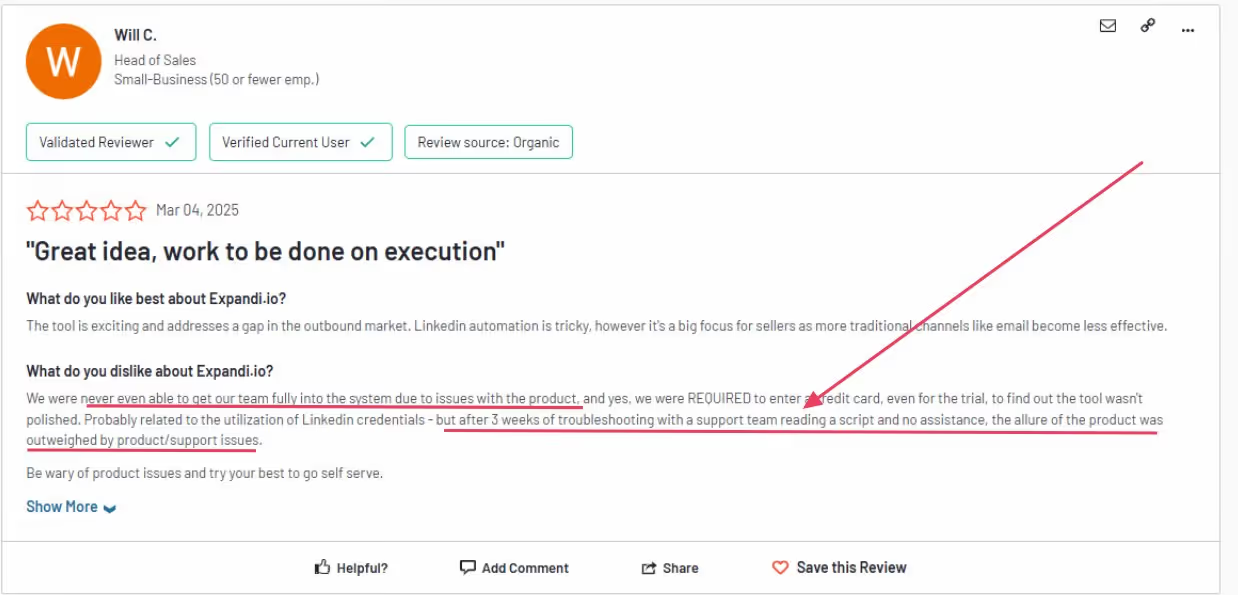
Vous pouvez l’essayer avec un essai gratuit de 7 jours. Ce n’est pas énorme, mais cela vous permet de tester certaines fonctionnalités et de vous faire votre propre avis.
3. OctopusCRM
OctopusCRM est un outil d’automatisation LinkedIn tout-en-un populaire, avec une multitude de fonctionnalités de prospection, de personnalisation et d’analyse.
Vous pouvez trouver vos profils cibles sur LinkedIn, les ajouter à une campagne et automatiser vos activités quotidiennes.
Cela vous fait gagner du temps et vous permet de vous concentrer sur d’autres tâches importantes (comme conclure des ventes !).
Vous pouvez en savoir plus dans notre avis détaillé, ou simplement l’essayer avec un autre essai gratuit de 7 jours.
Je ne sais pas si l’on peut vraiment se faire une idée en une semaine, cela dit.
Conclusion
L’outreach marketing consiste à contacter des prospects, des entreprises et des leads susceptibles d’être intéressés par votre activité.
Cela peut servir à vendre, renforcer la notoriété de la marque ou simplement développer votre propre réseau.
Il existe quatre principaux canaux de prospection, à savoir :
- Appels à froid
- Réseaux sociaux
Parmi eux, LinkedIn est la plus grande et la plus populaire plateforme pour le networking, les ventes outbound et les connexions de valeur.
Pour lancer une stratégie de prospection marketing efficace,
- Créez un persona client idéal
- Constituez une liste de prospects
- Commencez à contacter
- Personnalisez vos messages
Et si vous voulez simplifier considérablement tout le processus, je vous suggère un outil comme Outly.
Il prendra en charge la prospection LinkedIn + e-mail pour vous, avec hyper-personnalisation, relances, et même des actions de like et de commentaire sur les publications.
Et le meilleur, c’est que vous pouvez l’essayer vous-même avec un simple essai gratuit de 14 jours.
Cela a fonctionné pour nos clients, et cela fonctionnera aussi pour vous.
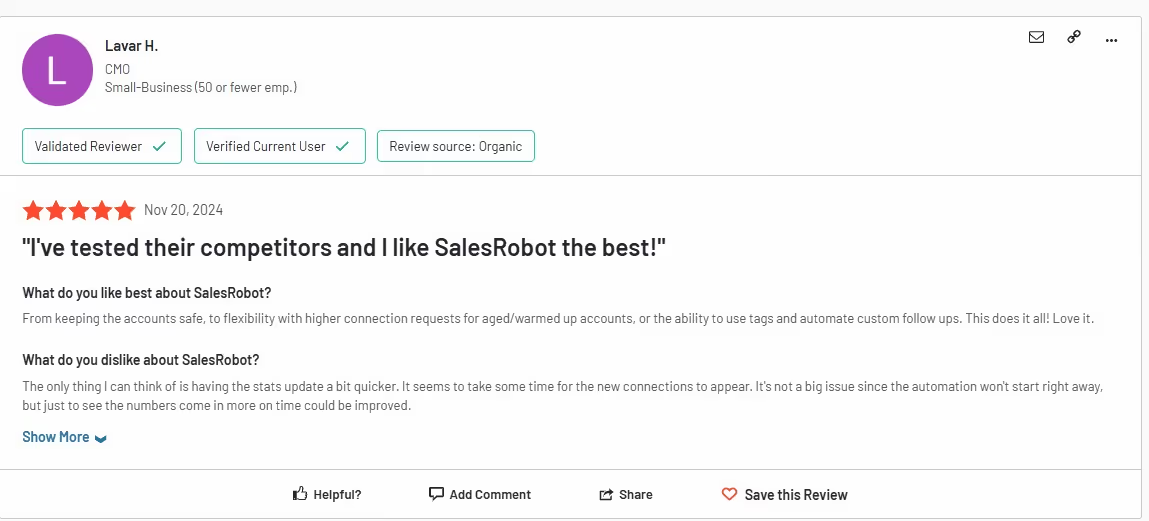
Bonne chance, et que la prospection commence !
Étonnez vos leads en vous clonant et en envoyant des vidéos et notes vocales personnalisées à chaque lead sur LinkedIn.
Si vous ne répondez pas aux leads dans les 5 minutes, vos chances de les convertir chutent de 50 %. Notre IA répond instantanément à votre place ! (et oui, vous pouvez l’entraîner)
Ne tirez pas à l’aveugle. Obtenez des analyses détaillées sur ce qui fonctionne.
Outly vous permet d’inviter d’autres membres de l’équipe, afin qu’ils puissent ajouter leur compte LinkedIn, lancer des campagnes de prospection et obtenir des résultats exceptionnels, tout comme vous.